Product
UX/UI
Case Study
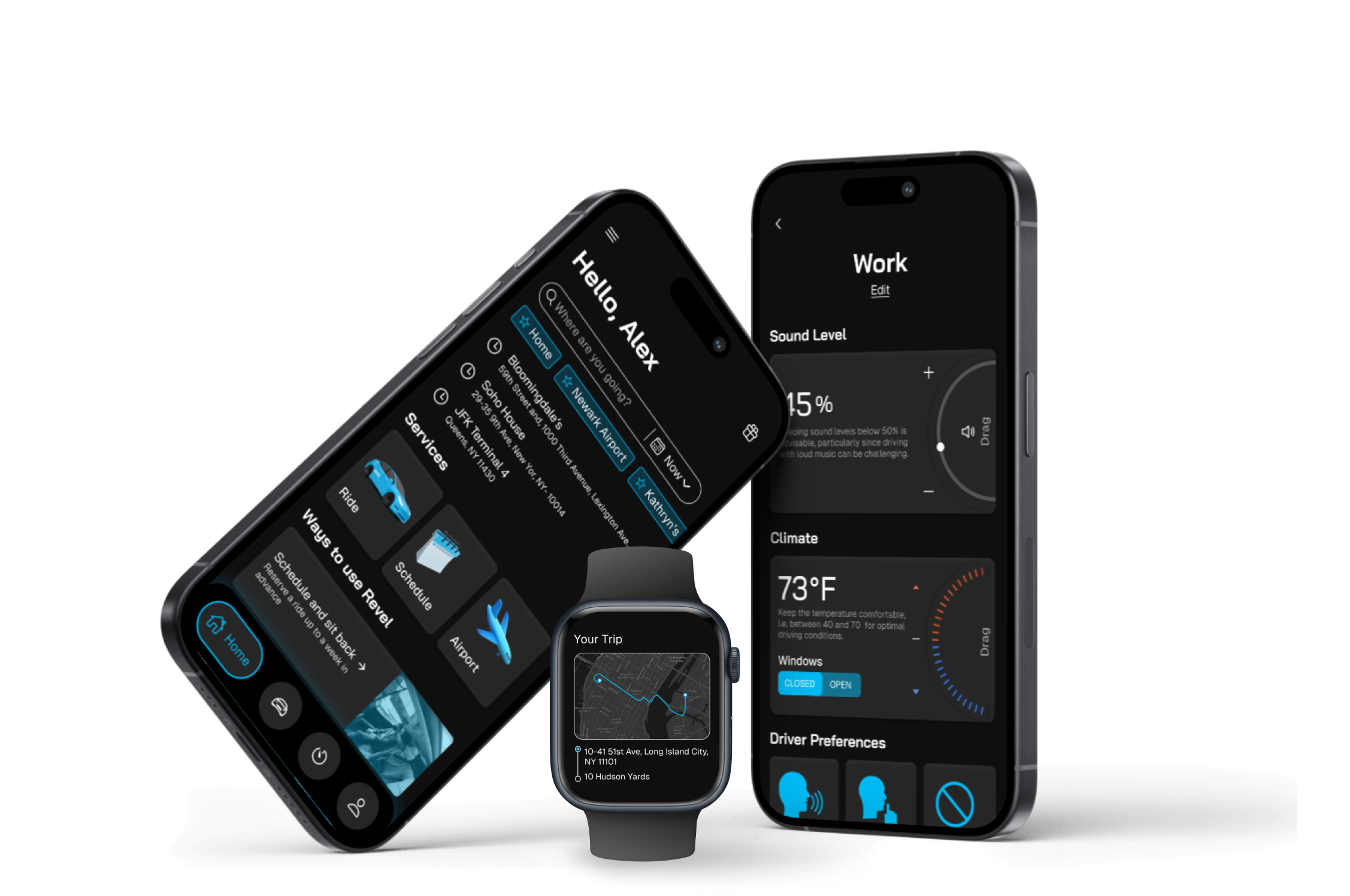

User Research, Product Design, UI/UX Design, IxD Design, Design System
Yukti Poddar, Kathryn Kopec, Beam Sosothikul
Figma, Miro, Adobe Illustrator, AfterEffects, Photoshop
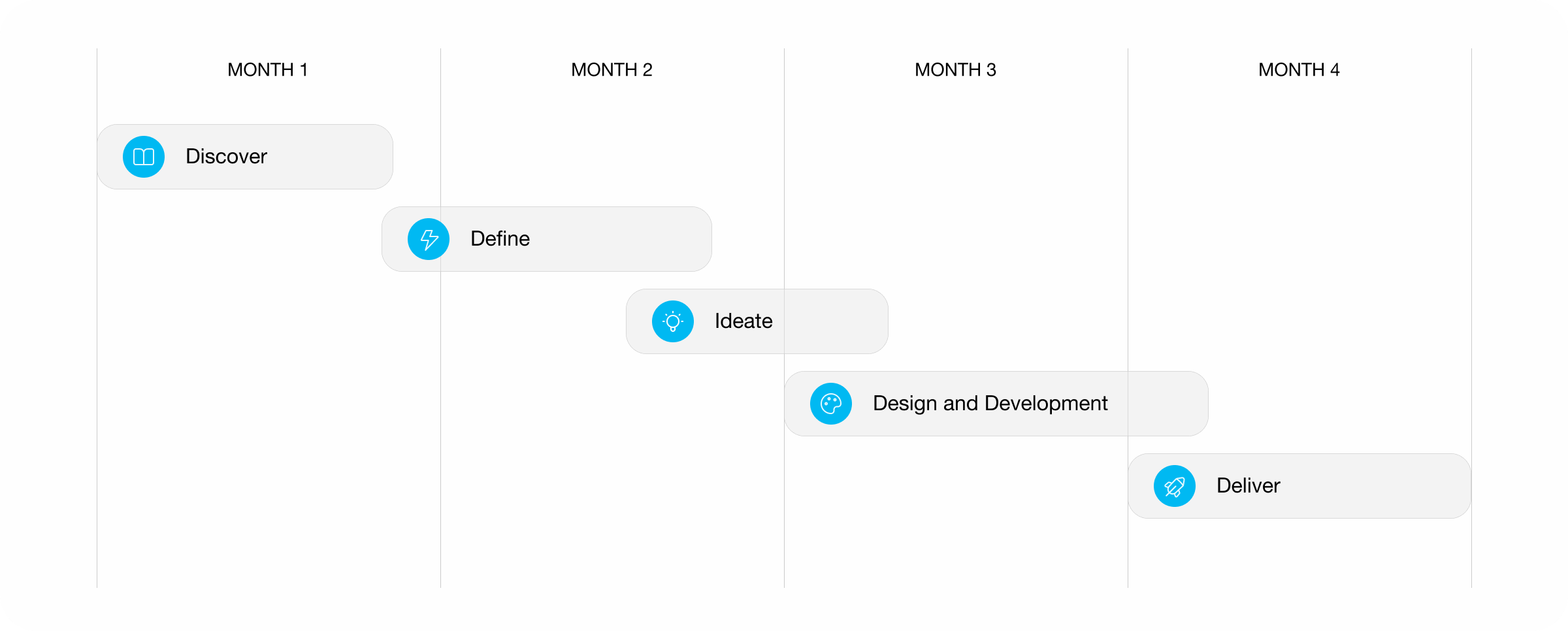
4 months
Revel is an all-electric ride-share service that was founded in 2018 in Brooklyn, New York. It offers eco-friendly transportation options in New York City and parts of New Jersey. The objective was to enhance the existing Revel app by introducing new features that address user challenges and improve overall functionality.

How Might We simplify the ride-booking experience while making travel more comfortable and personalized for users?

We created six new features, redesigned the app for a more seamless user experience, and built a design system to ensure consistency and scalability.
We developed four personas representing Revel’s target audience, interviewed individuals matching these profiles to understand their pain points, and then created features that addressed those challenges.

“I find it difficult to get into the right headspace for work when my commute is chaotic; I really need a calm and comfortable ride to set the tone for my day.”


“I often travel for brand trips, and it can be really annoying to book rides to and from the airport. I also love earning rewards; it gives me a sense of accomplishment.”

“I struggle to get around due to my vision impairment, which makes it difficult for me to schedule rides on ride-sharing apps.”

“I’m not that fluent in English, and sometimes it gets really hard to communicate with the driver or even properly use the app.”
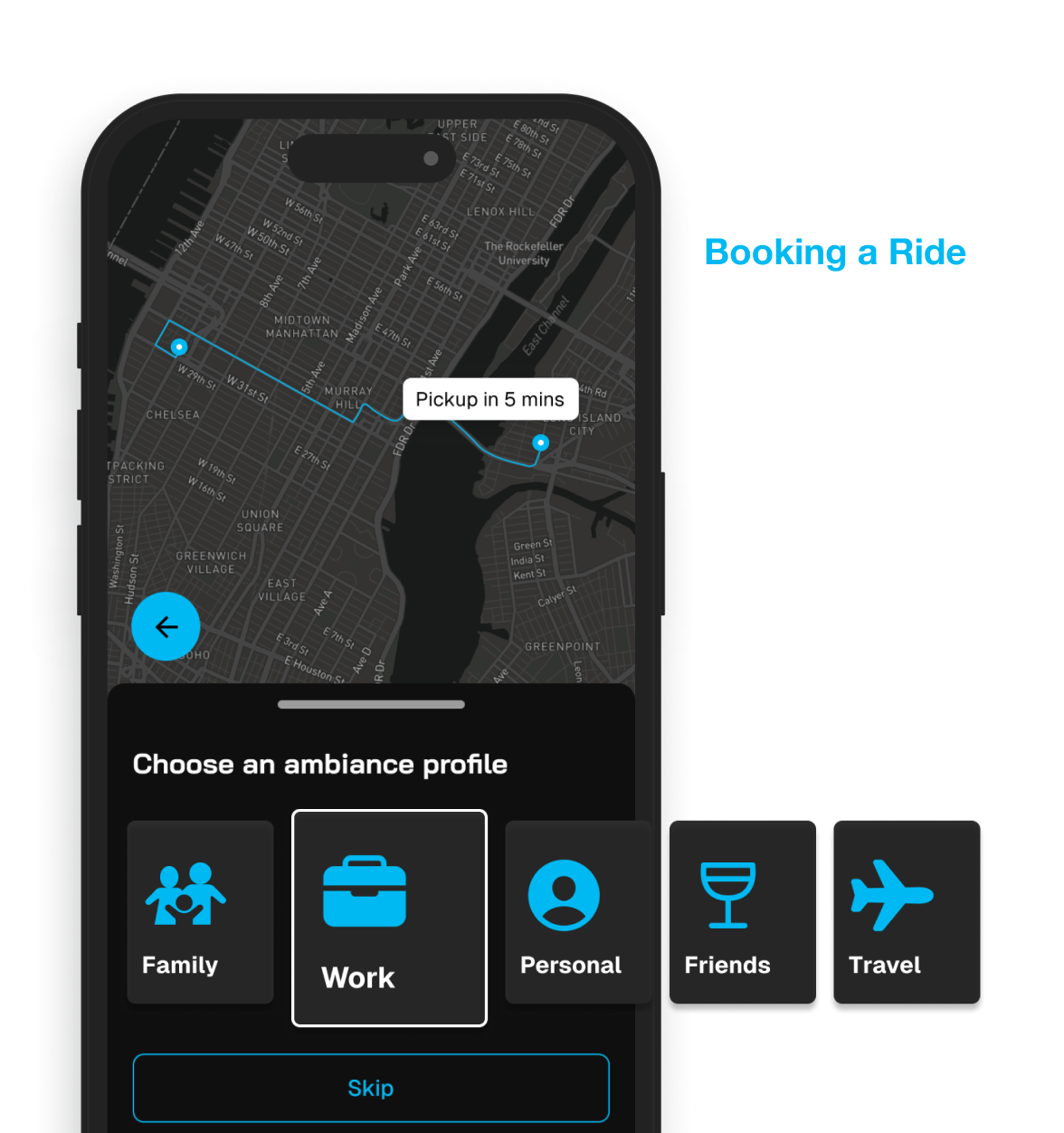
Select from various profiles based on mood and comfort preferences, integrating functionalities from the Tesla app for enhanced customization. Adjust temperature, noise levels, and ambiance to create your desired ride environment.
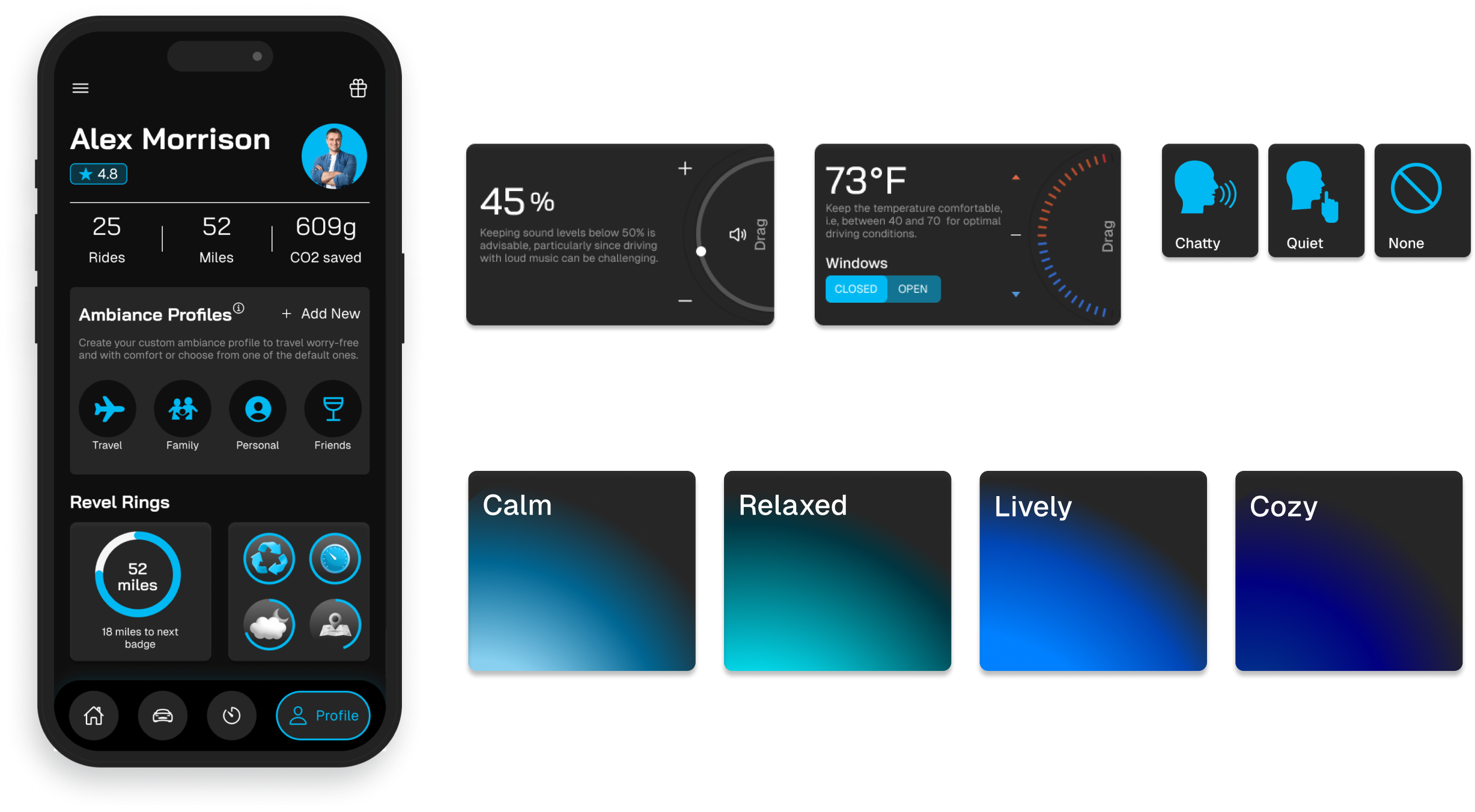
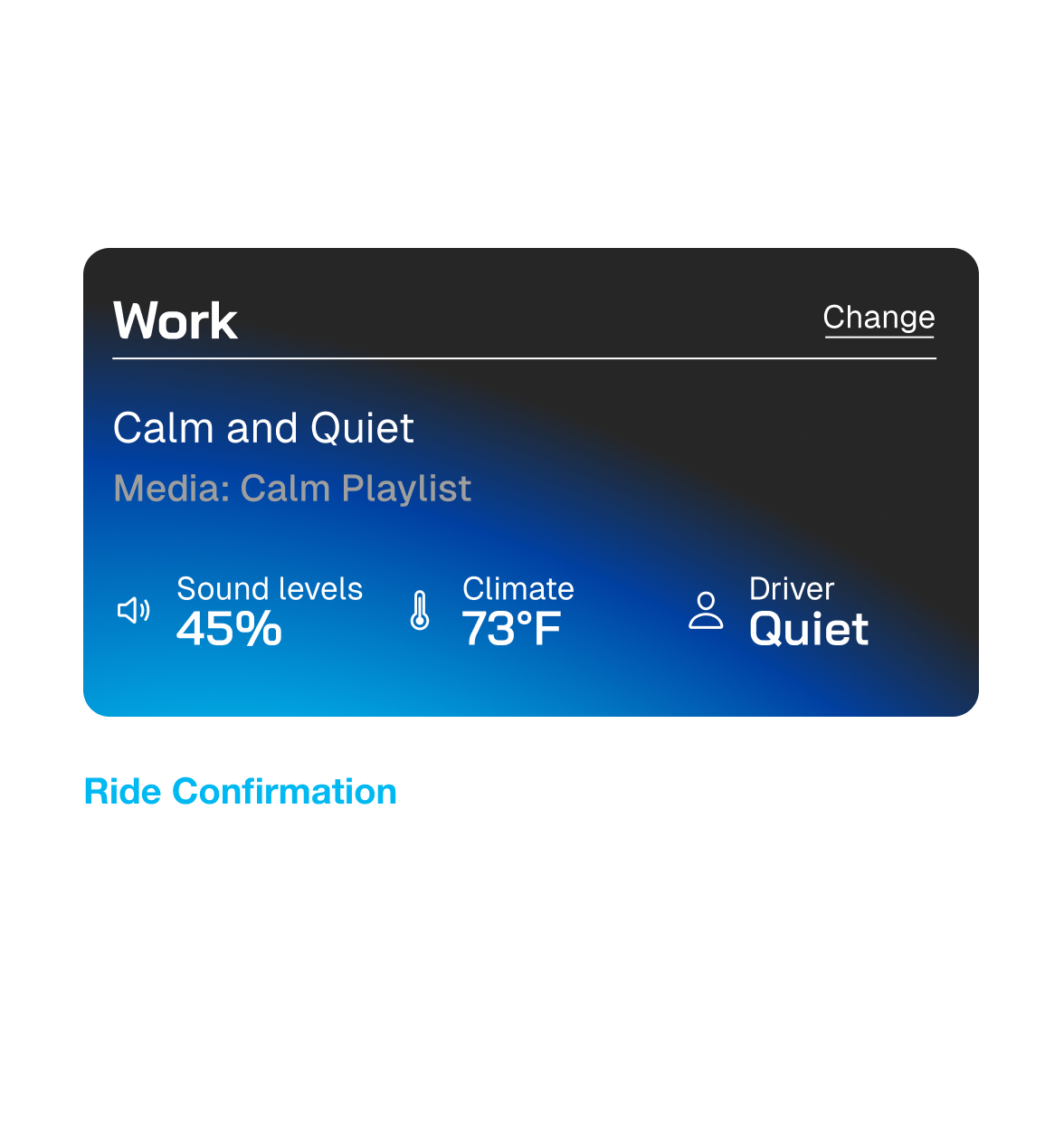
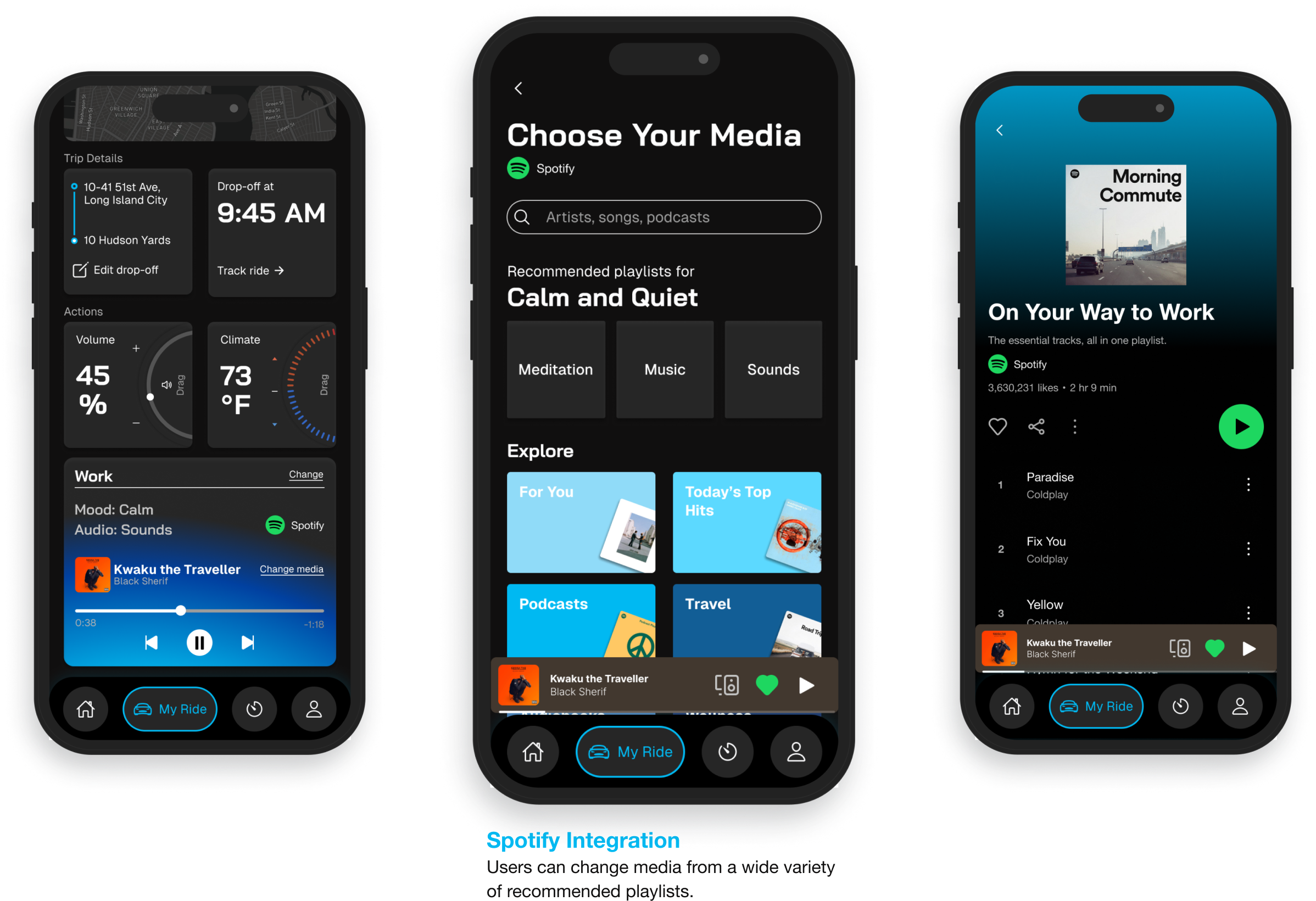
Control your entertainment via Revel app. Select from curated playlists, podcasts, and audiobooks. Users can also adjust the temperature and volume to their liking.
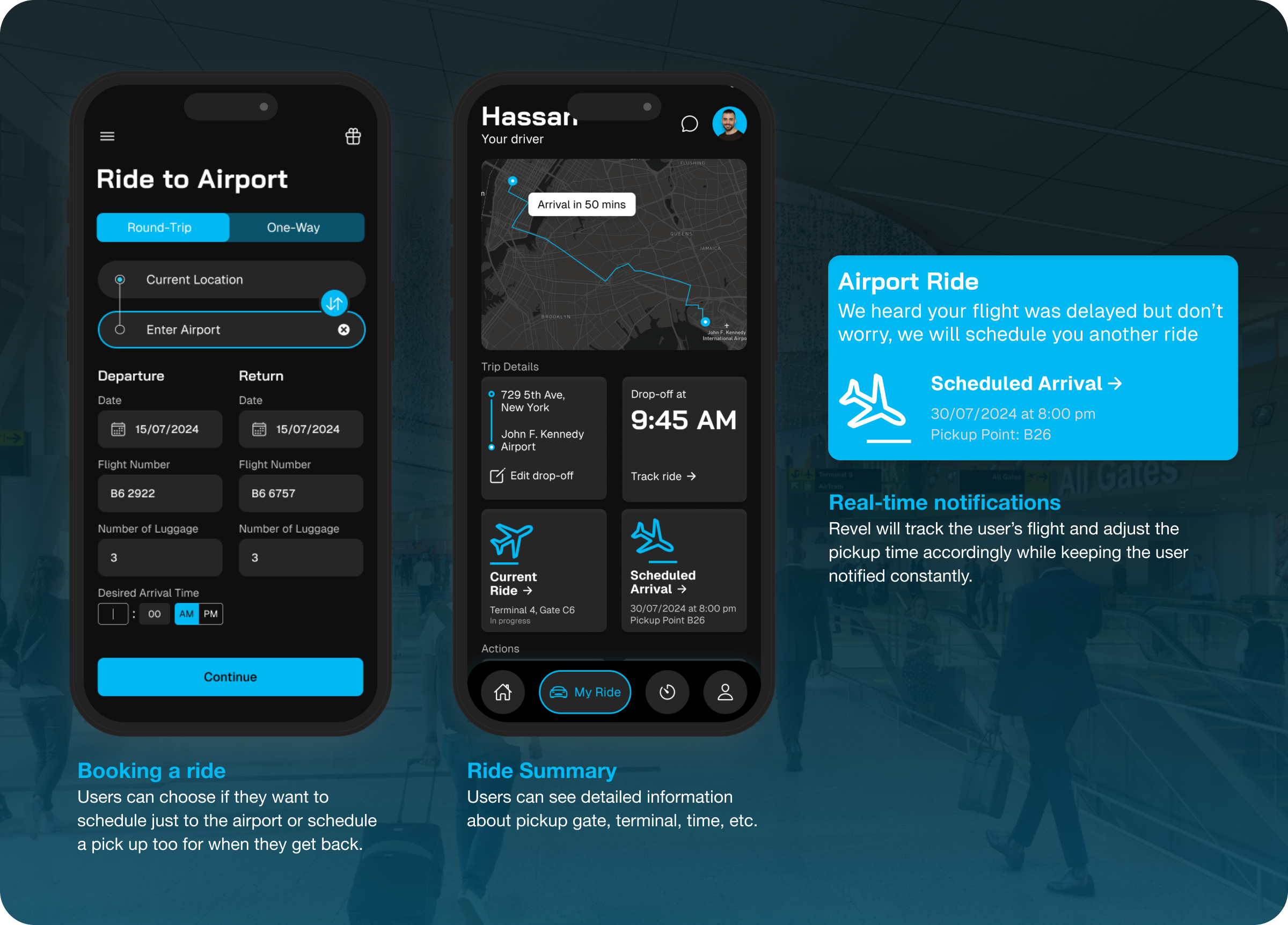
Simply input your flight details, and the app will sync your airport arrival and departure times with your ride, providing real-time updates and automatic rescheduling as needed.
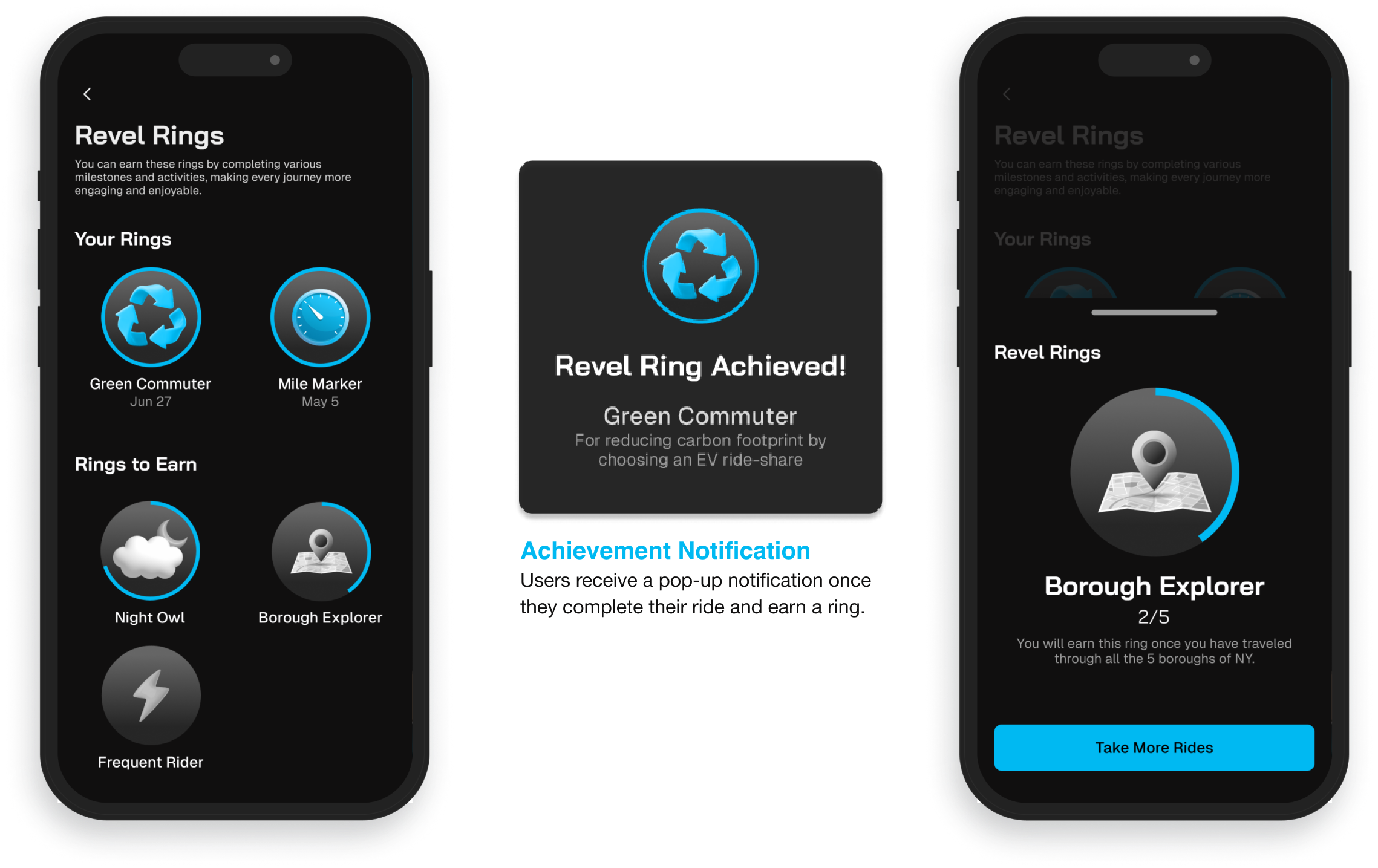
Revel Rings are achievement badges that boost user retention and encourage more trips by rewarding milestones and challenges, adding fun and motivation to the ride experience.
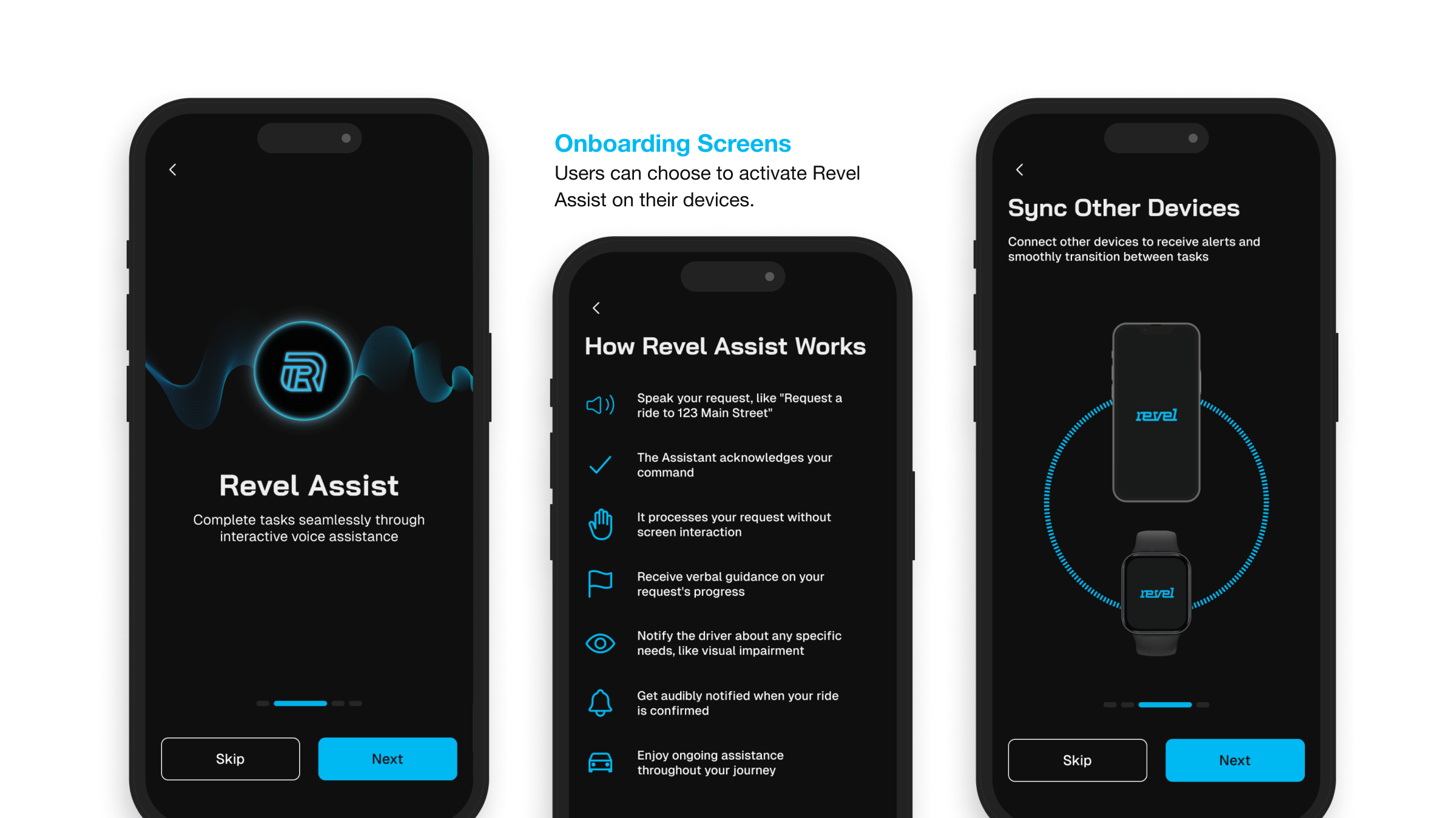
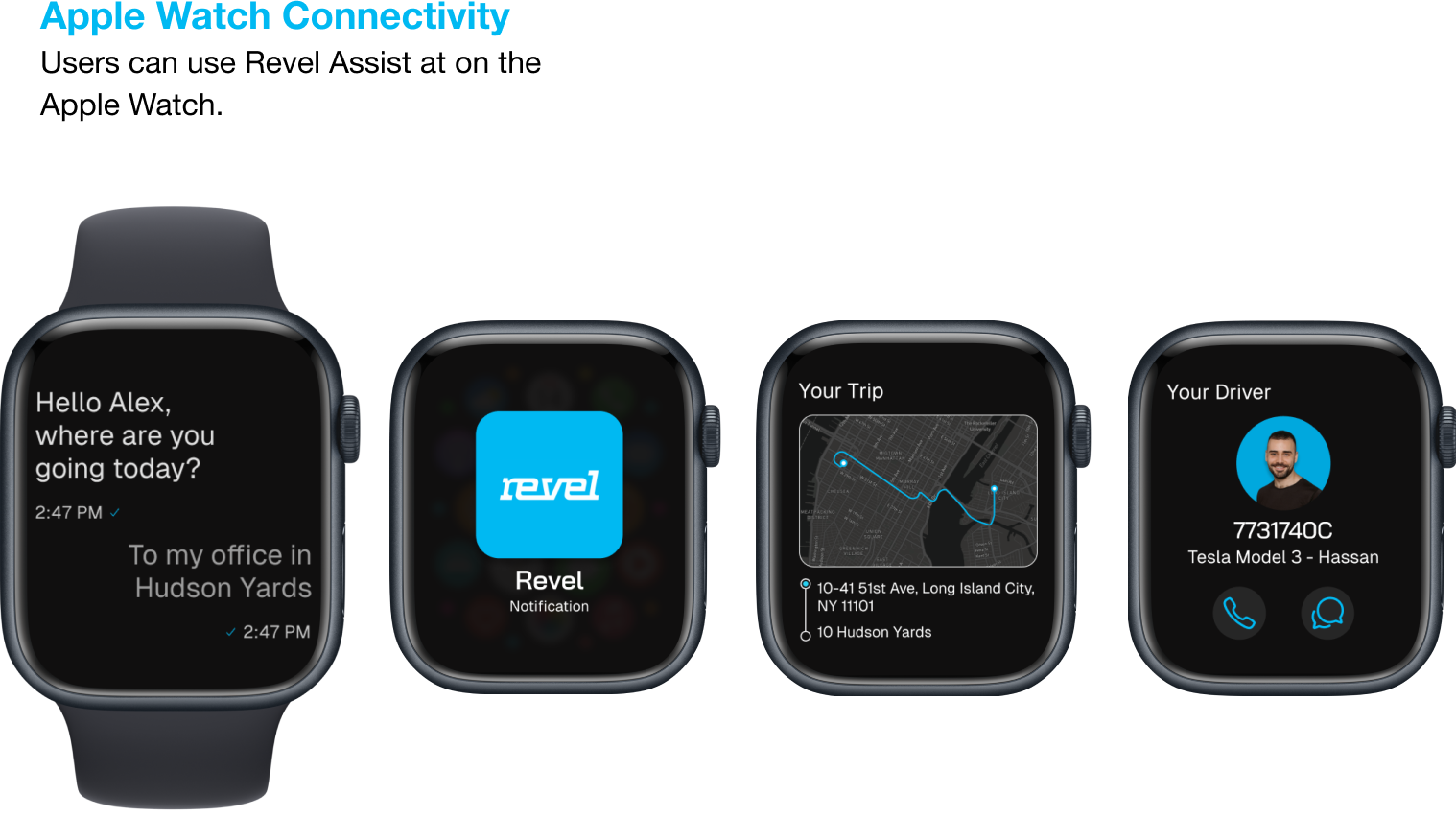
Communicate with Revel Assist using voice-only commands on your phone or Apple Watch to complete tasks like scheduling rides or checking updates hands-free, ensuring seamless convenience on the go.
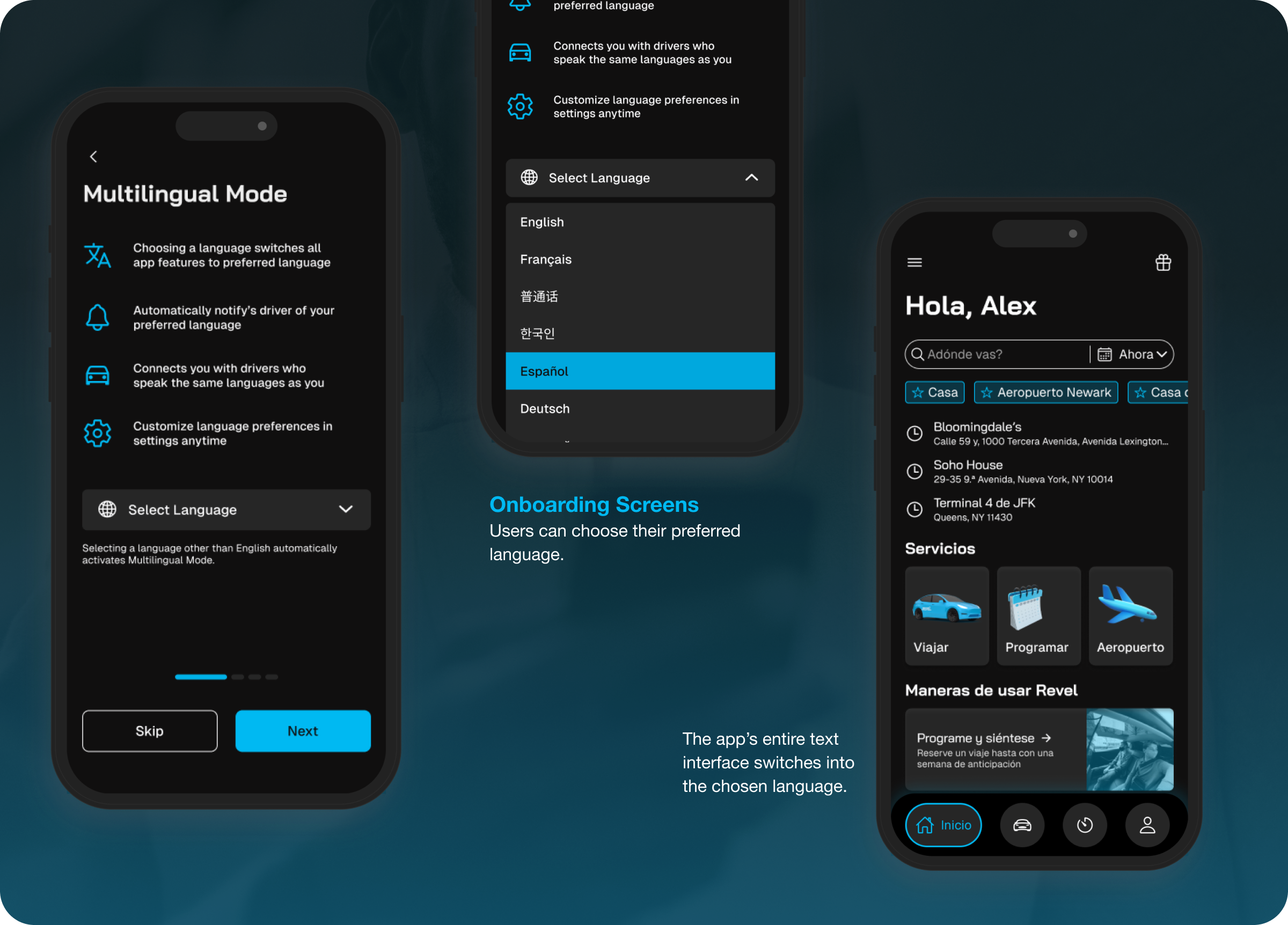
With Multilingual Mode enabled, the app’s interface text and all driver-user communication are automatically translated into the user’s preferred language, ensuring seamless interaction.
To make communicating with the driver easier, we incorporated real-time translation.
Users can see the text the driver sent in the original language and also see the translation.
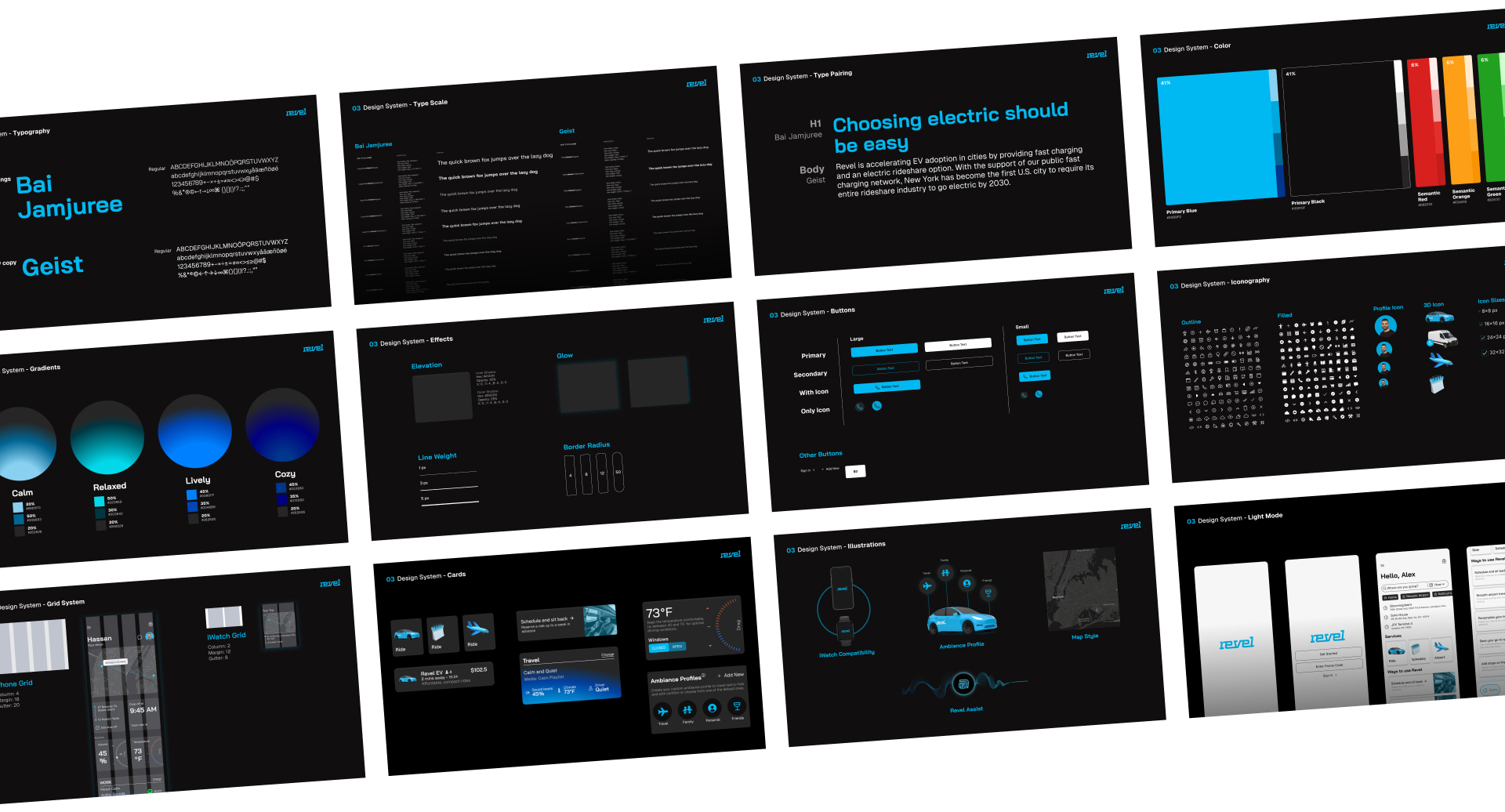
The design system for Revel is a comprehensive toolkit that ensures consistency and efficiency across all user interfaces. It includes a set of reusable components, style guidelines, and design patterns that maintain a cohesive look and feel throughout the app.

Working with research is a cheat code
It helped uncover opportunities to explore and led to quick and informed design decisions.

Championing the user
Gaining a clear understanding of the user simplified the development process, making it easier to create targeted and effective solutions.

Prioritizing essentials over extras
We aimed to incorporate more features, but due to time constraints, we had to focus on the MVP. This decision helped us concentrate on essential features.
